- Echo
- ECG
- Holter monitor
01
In-clinic Echo, ECG & Holter monitor
Echocardiography, ECG and Holter monitoring are done right at the clinic, so your tests and your consultation happen in one place.
Structural heart intervention
A new aortic valve delivered through the wrist or leg — without opening the chest
You don't have to face this decision alone. At your consultation, Dr. Mansour explains every image and every option to you and your family in plain words — and stays with you until you're back to your life.
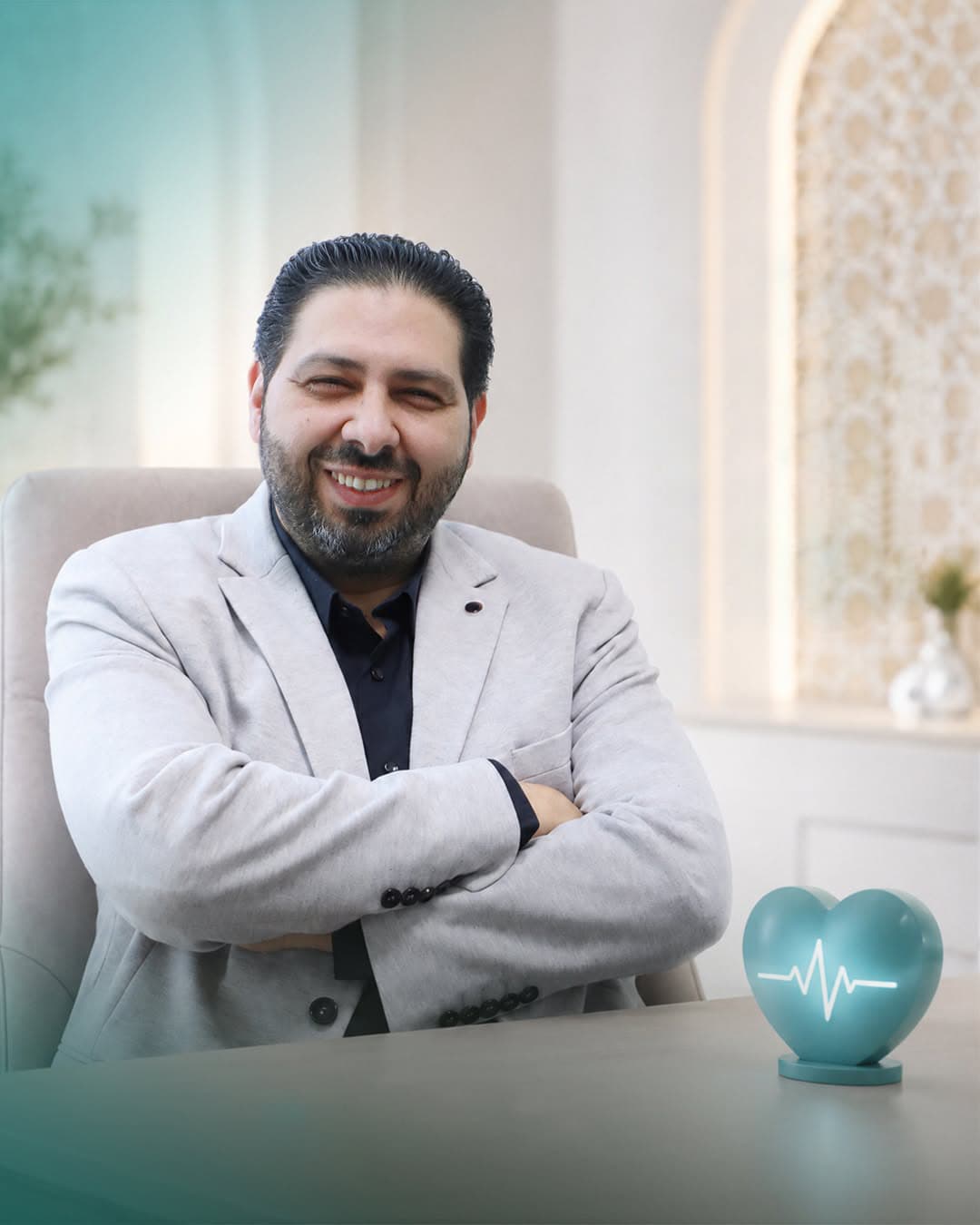 Dr. Mansour Farouk El-BehwashyConsultant Cardiologist & Cardiovascular SpecialistMScFEBFEBICFSCAI
What the procedure is
Aortic stenosis — a narrowing of the aortic valve — forces the heart to work much harder to push blood to the body, and left untreated in its severe form, carries a serious long-term outlook. For decades, the only fix was open-heart surgical valve replacement.
TAVI changes that. A new valve, compressed onto a delivery catheter, is guided — usually through the femoral artery in the leg, sometimes through the wrist or another access route — up to the diseased aortic valve. Once positioned precisely inside it, the new valve is expanded and immediately takes over the job of regulating blood flow, all without stopping the heart or opening the chest.
Why it may be recommended
No chest incision and no stopping the heart, unlike surgical valve replacement
Meaningfully shorter hospital stay and recovery than open surgery
Rapid symptom relief — many patients report easier breathing within days
A genuine option for patients whose age or health conditions previously ruled out surgery
Who may need evaluation for it
Tap whatever applies. It isn't a diagnosis — just a calm way to know whether it's time to talk to the doctor.
Chest pain right now, fainting or sudden breathlessness? Don't wait — go to the nearest emergency department or call 123.
Nothing selected yet — tap any line that applies to you.
Step by step
Knowing what comes next takes away most of the fear. Here is what to expect before, during and after — explained to you again, in person, before anything is done.
Something here worrying you?
Ask the clinic — the team replies on WhatsApp.
Before
Your care team gives you instructions specific to your case — always follow those first.
On the day
After
Clinic features
Echocardiography, ECG and Holter monitoring are done right at the clinic, so your tests and your consultation happen in one place.
14days
FreeAfter your examination, your follow-up consultation within 14 days is free of charge.
Questions after your visit or procedure? We keep following up with you and answering them along the way.
Honest about safety
Every medical procedure carries some risk, and you deserve the full picture. Dr. Mansour reviews your personal risk with you before you agree to anything.
This page is general information and does not replace a medical examination. Whether this — or any — procedure is appropriate for you is decided only after evaluation by the doctor.
Already advised?
Send your reports from your phone in a few minutes. Dr. Mansour's team reviews them before your visit, so your consultation at the Fifth Settlement clinic starts with answers — not from zero.
Private consultation · 1,000 EGP · Fifth Settlement, New Cairo
Your questions
Still have a question on your mind?
Ask the clinic directly — no need to call. The team replies to you on WhatsApp.
Open surgery requires stopping the heart and a heart-lung machine, with a hospital stay of a week or more and a recovery of several weeks. TAVI is done through a small puncture, without stopping the heart, with most patients home within days and back to normal activity much sooner.
TAVI was originally developed specifically for patients considered too high-risk for open surgery, and age alone rarely rules it out today. The only way to know is a proper evaluation — bring your echocardiogram and any prior reports to your consultation.
Long-term data now extends past a decade and shows durability comparable to surgical valves for most patients, and valve function is tracked at every follow-up. Your individual outlook depends on your specific case, which is something Dr. Mansour Farouk El-Behwashy discusses with you directly.
Clinical references
A pacemaker is a small, battery-powered device implanted just under the skin near the collarbone, with one to three leads placed in the heart to sense and correct a heartbeat that's too slow or irregular — restoring the energy and stamina that slow rhythms take away.
May be considered
When a slow heart rhythm or heart block, confirmed on ECG or Holter, causes fatigue, dizziness or fainting.
A tiny balloon widens the narrowed section of a coronary artery, and a stent — a small mesh tube — is left in place to keep it open, restoring blood flow to the heart muscle in the same sitting as the diagnostic catheterization.
May be considered
When catheterization shows a significant narrowing, or angina continues despite medication.
Peace of mind starts with one step
Consultation 1,000 EGP at the Fifth Settlement clinic, New Cairo — paid at the clinic, with a free follow-up visit within 14 days.
Chest pain right now, fainting or sudden breathlessness? Don't wait — go to the nearest emergency department or call 123.