- Echo
- ECG
- Holter monitor
01
In-clinic Echo, ECG & Holter monitor
Echocardiography, ECG and Holter monitoring are done right at the clinic, so your tests and your consultation happen in one place.
Cardiac rhythm management
A small device under the collarbone that keeps a slow or irregular heartbeat steady
You don't have to face this decision alone. At your consultation, Dr. Mansour explains every image and every option to you and your family in plain words — and stays with you until you're back to your life.
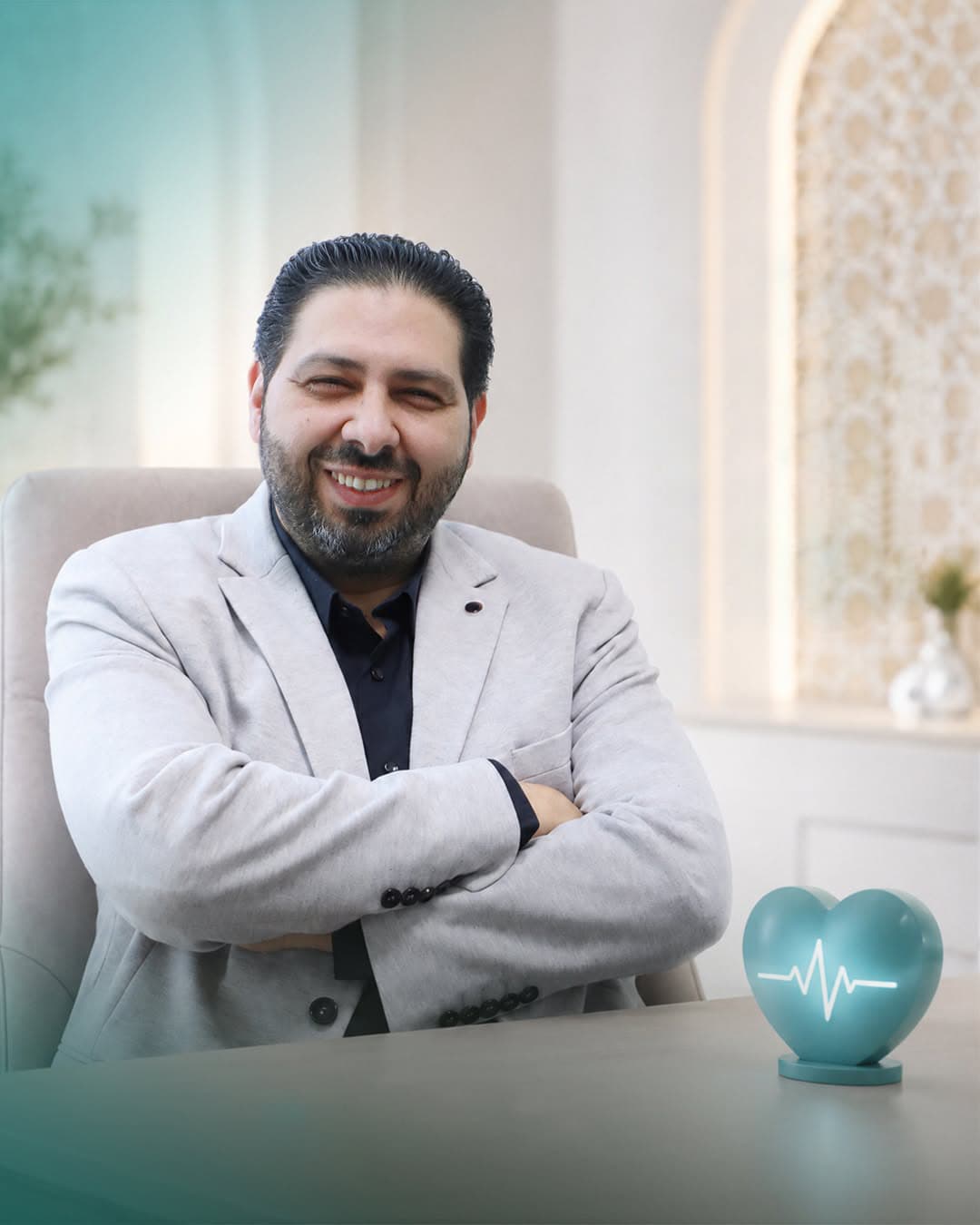 Dr. Mansour Farouk El-BehwashyConsultant Cardiologist & Cardiovascular SpecialistMScFEBFEBICFSCAI
What the procedure is
When the heart's natural electrical system slows down or misfires — a condition called bradycardia, or a conduction block — the result is fatigue, dizziness, or fainting, because the heart can no longer reliably speed up when the body needs it to.
A pacemaker corrects this directly. Its pulse generator, about the size of a matchbox, sits under the skin near the collarbone; thin, insulated leads run from it into the heart chambers. The device continuously monitors your natural rhythm and delivers a tiny electrical pulse only when a beat is needed — most of the time, if your own rhythm is adequate, it simply watches and does nothing at all.
Why it may be recommended
Directly corrects the cause of fatigue, dizziness, and fainting from a slow heart rhythm
A minor, well-established procedure — not open-heart surgery
Modern devices are MRI-compatible and last roughly 8–12 years before a simple battery-only replacement
Remote monitoring options let your rhythm be tracked between visits
Who may need evaluation for it
Tap whatever applies. It isn't a diagnosis — just a calm way to know whether it's time to talk to the doctor.
Chest pain right now, fainting or sudden breathlessness? Don't wait — go to the nearest emergency department or call 123.
Nothing selected yet — tap any line that applies to you.
Step by step
Knowing what comes next takes away most of the fear. Here is what to expect before, during and after — explained to you again, in person, before anything is done.
Something here worrying you?
Ask the clinic — the team replies on WhatsApp.
Before
Your care team gives you instructions specific to your case — always follow those first.
On the day
After
Clinic features
Echocardiography, ECG and Holter monitoring are done right at the clinic, so your tests and your consultation happen in one place.
14days
FreeAfter your examination, your follow-up consultation within 14 days is free of charge.
Questions after your visit or procedure? We keep following up with you and answering them along the way.
Honest about safety
Every medical procedure carries some risk, and you deserve the full picture. Dr. Mansour reviews your personal risk with you before you agree to anything.
This page is general information and does not replace a medical examination. Whether this — or any — procedure is appropriate for you is decided only after evaluation by the doctor.
Already advised?
Send your reports from your phone in a few minutes. Dr. Mansour's team reviews them before your visit, so your consultation at the Fifth Settlement clinic starts with answers — not from zero.
Private consultation · 1,000 EGP · Fifth Settlement, New Cairo
Your questions
Still have a question on your mind?
Ask the clinic directly — no need to call. The team replies to you on WhatsApp.
No — the electrical pulses it delivers, when needed, are far too small to feel. Most patients simply notice the improvement in energy and no longer having the symptoms that led to the pacemaker in the first place.
Most modern pacemakers are MRI-conditional, meaning MRI scans are possible under the right settings and precautions. Your device details and any restrictions are documented on the ID card you're given after implantation.
Typically every 8–12 years, depending on how much pacing your heart actually needs. Replacement only involves changing the pulse generator through the original site — the leads themselves usually stay in place, making it a shorter, simpler procedure than the original implant.
Clinical references
An ICD is a pacemaker-sized device that continuously monitors your heart rhythm and can deliver a corrective shock within seconds if it detects a dangerously fast, chaotic rhythm — the standard protection for patients at meaningful risk of sudden cardiac arrest.
May be considered
When the heart's pumping function is significantly reduced, or after a dangerous rhythm or a survived cardiac arrest.
TAVI replaces a narrowed (stenotic) aortic valve with a new, catheter-delivered valve that expands and takes over inside the old one — the modern, minimally invasive alternative to open-heart aortic valve replacement surgery.
May be considered
When an echocardiogram confirms severe narrowing of the aortic valve and valve replacement is being discussed.
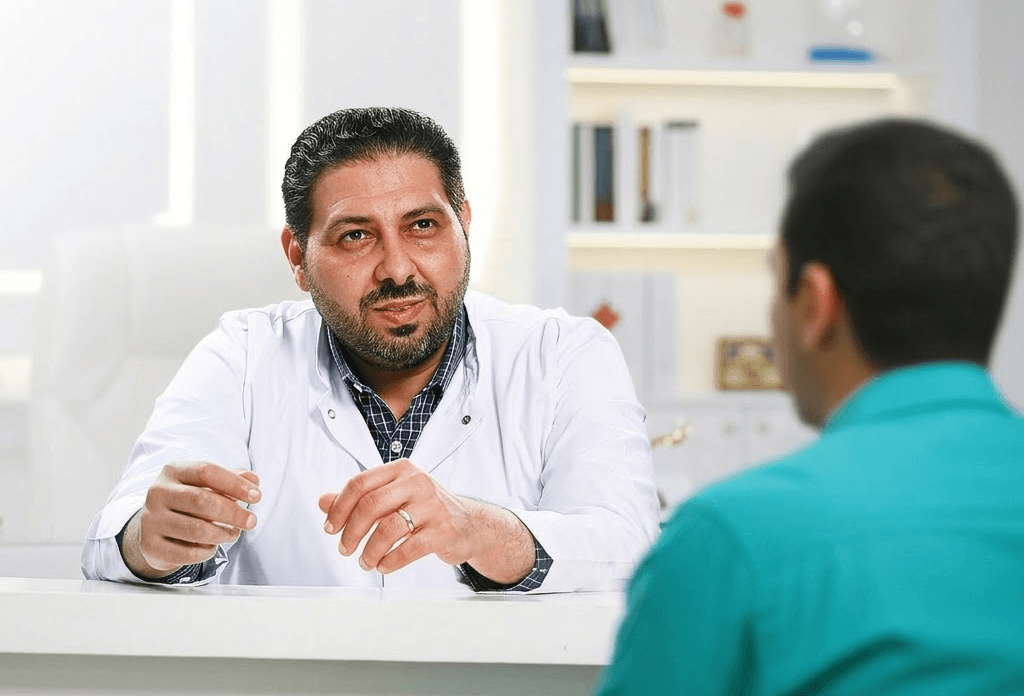
Peace of mind starts with one step
Consultation 1,000 EGP at the Fifth Settlement clinic, New Cairo — paid at the clinic, with a free follow-up visit within 14 days.
Chest pain right now, fainting or sudden breathlessness? Don't wait — go to the nearest emergency department or call 123.