- Echo
- ECG
- Holter monitor
01
In-clinic Echo, ECG & Holter monitor
Echocardiography, ECG and Holter monitoring are done right at the clinic, so your tests and your consultation happen in one place.
Cardiac rhythm management
Continuous protection against dangerous, potentially fatal heart rhythms
You don't have to face this decision alone. At your consultation, Dr. Mansour explains every image and every option to you and your family in plain words — and stays with you until you're back to your life.
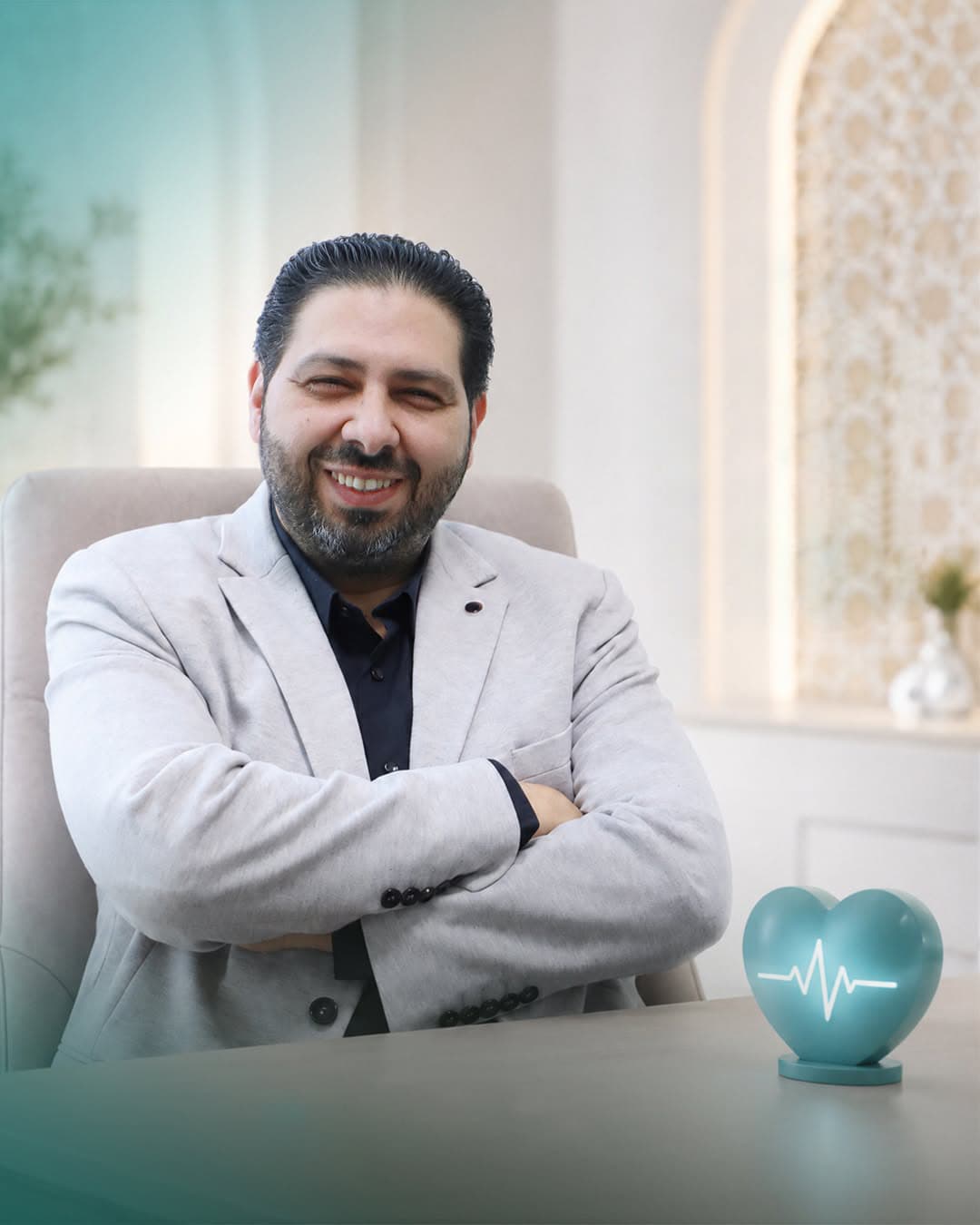 Dr. Mansour Farouk El-BehwashyConsultant Cardiologist & Cardiovascular SpecialistMScFEBFEBICFSCAI
What the procedure is
Certain heart conditions — a prior major heart attack, a weakened heart muscle (low ejection fraction), or an inherited rhythm disorder — carry an elevated risk of a sudden, life-threatening arrhythmia (ventricular tachycardia or fibrillation). Medication alone cannot guarantee protection against these episodes.
An ICD is implanted under the skin near the collarbone, with a lead placed in the heart, similarly to a pacemaker — and in fact, most ICDs also provide standard pacemaker function for slow rhythms. Its defining role is different: it continuously watches for the specific dangerous rhythm pattern, and if one occurs, it can pace the heart out of it, or deliver a shock to restore a normal rhythm within seconds — far faster than any external response could.
Why it may be recommended
The fastest, most reliable protection against a sudden dangerous arrhythmia — far faster than waiting for emergency response
Continuous, automatic monitoring — no action needed from you for it to work
Most devices also provide backup pacemaker function for slow rhythms
Remote monitoring flags concerning trends to your care team between visits
Who may need evaluation for it
Tap whatever applies. It isn't a diagnosis — just a calm way to know whether it's time to talk to the doctor.
Chest pain right now, fainting or sudden breathlessness? Don't wait — go to the nearest emergency department or call 123.
Nothing selected yet — tap any line that applies to you.
Step by step
Knowing what comes next takes away most of the fear. Here is what to expect before, during and after — explained to you again, in person, before anything is done.
Something here worrying you?
Ask the clinic — the team replies on WhatsApp.
Before
Your care team gives you instructions specific to your case — always follow those first.
On the day
After
Clinic features
Echocardiography, ECG and Holter monitoring are done right at the clinic, so your tests and your consultation happen in one place.
14days
FreeAfter your examination, your follow-up consultation within 14 days is free of charge.
Questions after your visit or procedure? We keep following up with you and answering them along the way.
Honest about safety
Every medical procedure carries some risk, and you deserve the full picture. Dr. Mansour reviews your personal risk with you before you agree to anything.
This page is general information and does not replace a medical examination. Whether this — or any — procedure is appropriate for you is decided only after evaluation by the doctor.
Already advised?
Send your reports from your phone in a few minutes. Dr. Mansour's team reviews them before your visit, so your consultation at the Fifth Settlement clinic starts with answers — not from zero.
Private consultation · 1,000 EGP · Fifth Settlement, New Cairo
Your questions
Still have a question on your mind?
Ask the clinic directly — no need to call. The team replies to you on WhatsApp.
Most patients describe it as a sudden, brief jolt — startling but over in an instant. Many ICD therapies are actually painless pacing that corrects the rhythm without ever reaching the shock stage. Either way, it means the device did exactly what it's there to do.
They're implanted similarly and most ICDs include standard pacemaker function for slow rhythms, but their main purpose differs: a pacemaker corrects a heart that beats too slowly, while an ICD's primary role is detecting and stopping a dangerously fast, chaotic rhythm before it becomes life-threatening.
For most patients, yes, since it's addressing an ongoing underlying risk — but this is reassessed at every follow-up as your heart function is re-evaluated. The generator itself is replaced roughly every 6–10 years as the battery depletes, through a shorter procedure than the original implant.
A pacemaker is a small, battery-powered device implanted just under the skin near the collarbone, with one to three leads placed in the heart to sense and correct a heartbeat that's too slow or irregular — restoring the energy and stamina that slow rhythms take away.
May be considered
When a slow heart rhythm or heart block, confirmed on ECG or Holter, causes fatigue, dizziness or fainting.
TAVI replaces a narrowed (stenotic) aortic valve with a new, catheter-delivered valve that expands and takes over inside the old one — the modern, minimally invasive alternative to open-heart aortic valve replacement surgery.
May be considered
When an echocardiogram confirms severe narrowing of the aortic valve and valve replacement is being discussed.
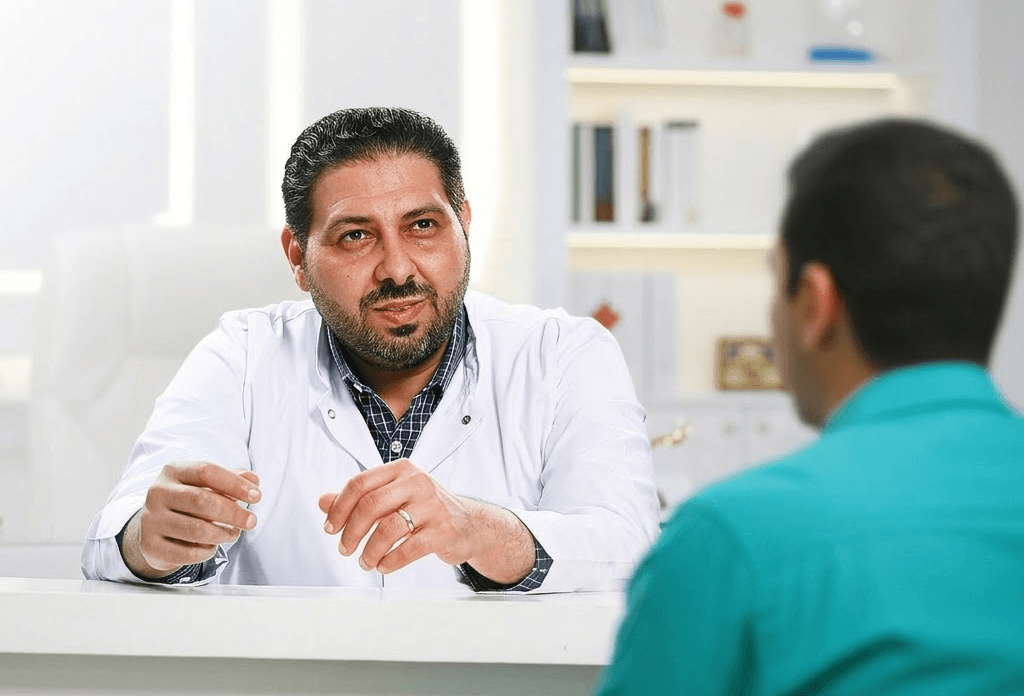
Peace of mind starts with one step
Consultation 1,000 EGP at the Fifth Settlement clinic, New Cairo — paid at the clinic, with a free follow-up visit within 14 days.
Chest pain right now, fainting or sudden breathlessness? Don't wait — go to the nearest emergency department or call 123.